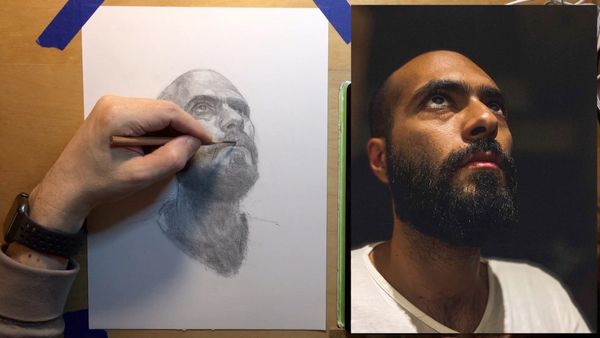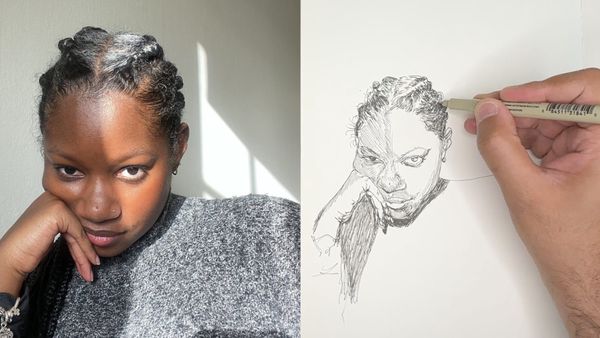
Find the Right Lines by Making "Wrong" Marks with Graphite Artist Zac Rybacki
"I have to make a lot of wrong marks so that I can see where the right marks are supposed to be..."
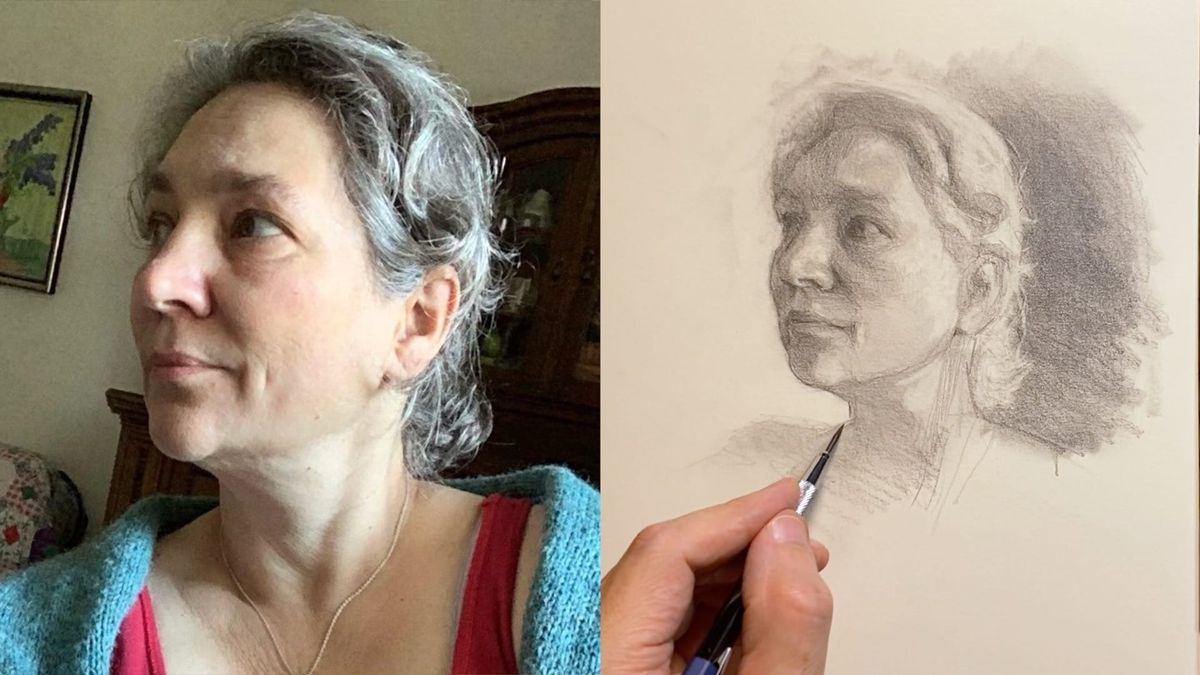
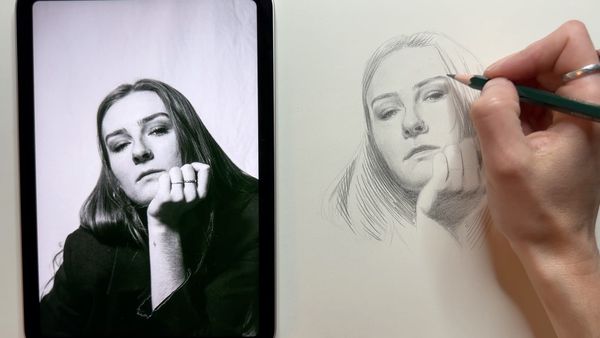
In this graphite portrait lesson (74 mins), artist Zac Rybacki shares a liberating core philosophy: early marks on your paper aren’t meant to be perfect; they are simply measuring tools to help you find your way.
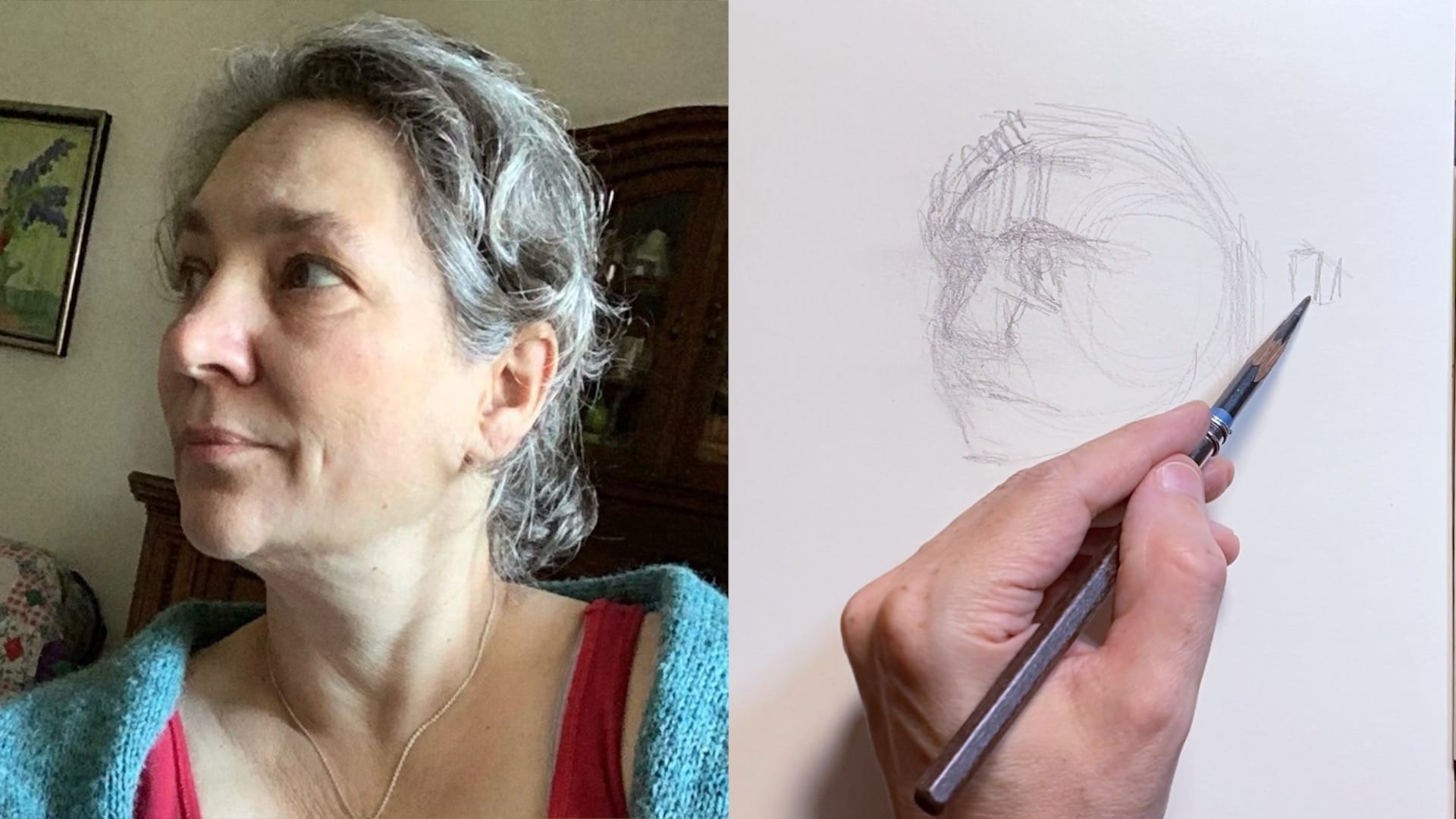
By intentionally making fast, loose, and even "wrong" marks at the start, you establish a line in the sand. From there, drawing becomes an engaging, iterative process of adjusting, refining, and chipping away at the form—much like carving a sculpture out of marble—to reveal the likeness of your subject.
What You’ll Explore in This Lesson
Zac walks you through his loose, intuitive approach to graphite portraiture, showing you how to focus on the active journey of observation rather than getting bogged down by a rigid, step-by-step formula. You will learn how to:
- Use Mistakes to Your Advantage: Learn how to start fast and loose using a chunky pencil (like a Prismacolor Ebony) to block in shapes without the fear of committing too early.
- Measure the "In-Between" Spaces: We naturally focus on highly recognizable features like the eyes, nose, and mouth, which often leads us to accidentally squish the spaces between them. Zac teaches you how to look at these negative shapes to establish highly accurate spatial relationships.
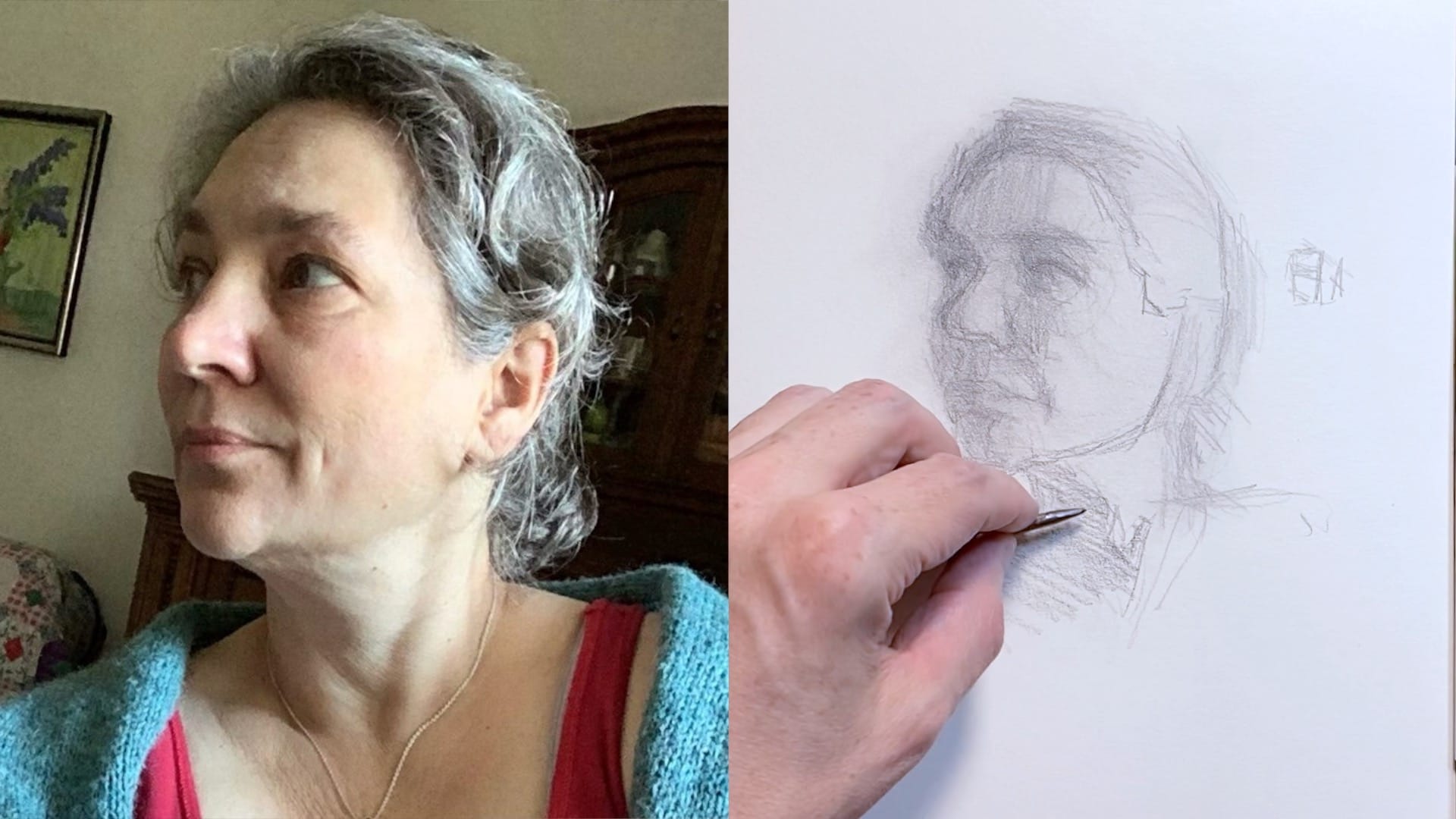
- Master the Three Types of Edges: Discover how to identify and apply hard, soft, and lost edges to create a sense of three-dimensional form.
- Harness Lighting Drama: Learn to use a dark, simplified mass in the background to make the light caught in Annette's hair and face truly pop, creating an evocative value hierarchy.
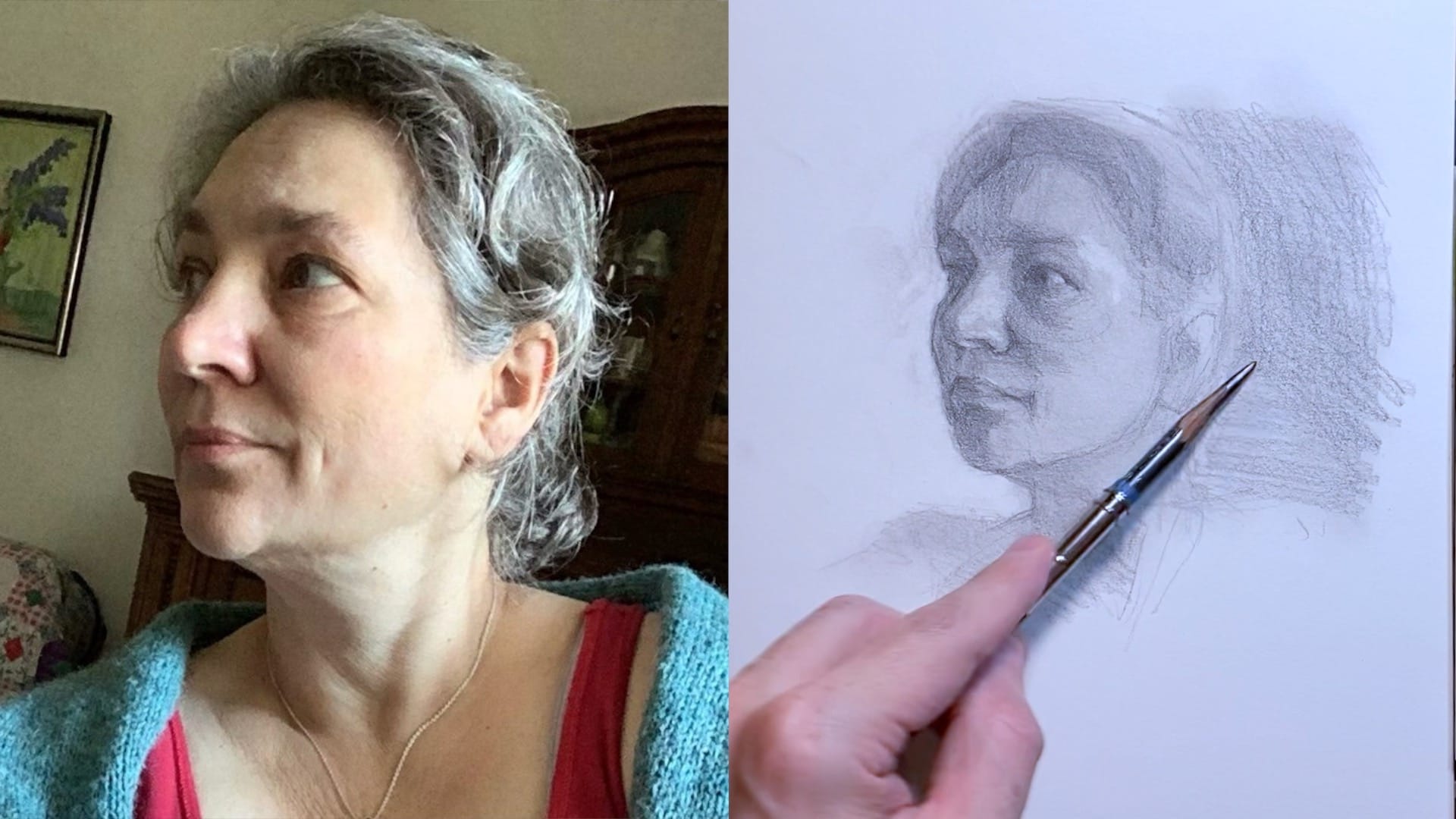
Shift Your Perspective
"I have to make a lot of wrong marks so that I can see where the right marks are supposed to be... If you're like me, you'll make some mistakes, and this idea of how we correct them is frankly a more valuable lesson than getting everything perfect on the first try."
Grab your drawing paper, a couple of pencils (a soft sketching pencil and a standard mechanical or medium-hard pencil), a kneaded eraser, and a piece of tissue for blending.
Remember, there's no pressure to produce a masterpiece in a single sitting. Embrace the adjustments, enjoy the rhythm of erasing and drawing, and let your portrait evolve naturally. Let's get started!