Capture Candid Character with Watercolor Artist Pedro Loureiro
Learn how to capture the vitality of a candid profile portrait, accessories and all.

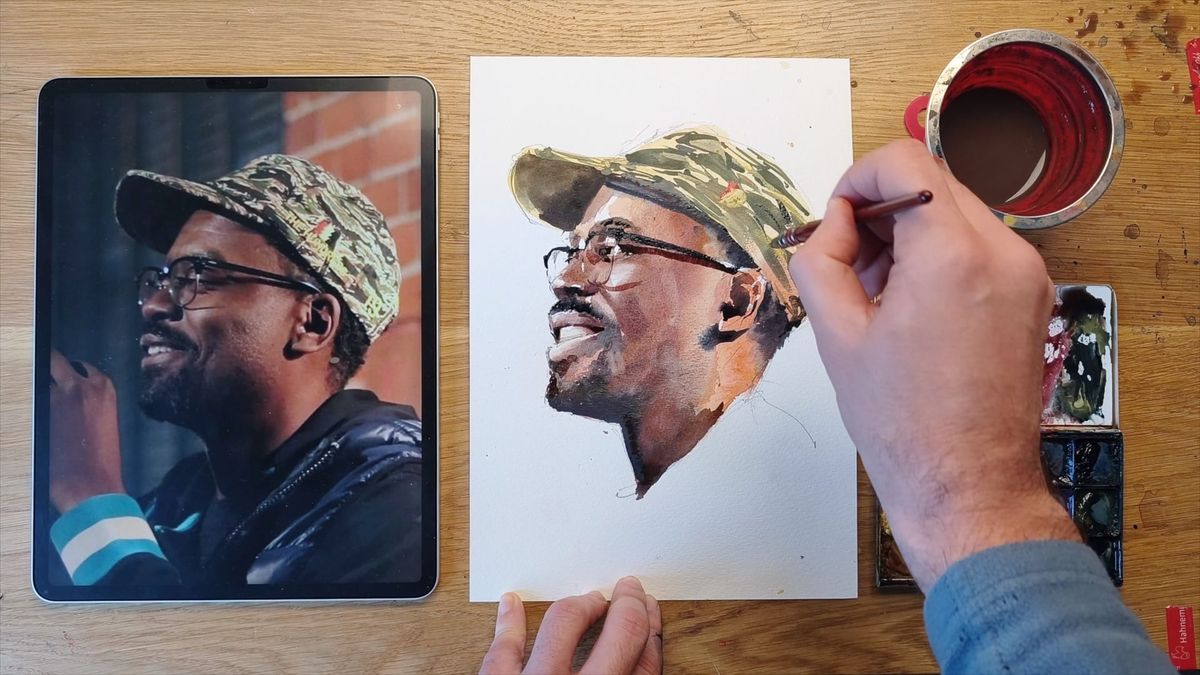
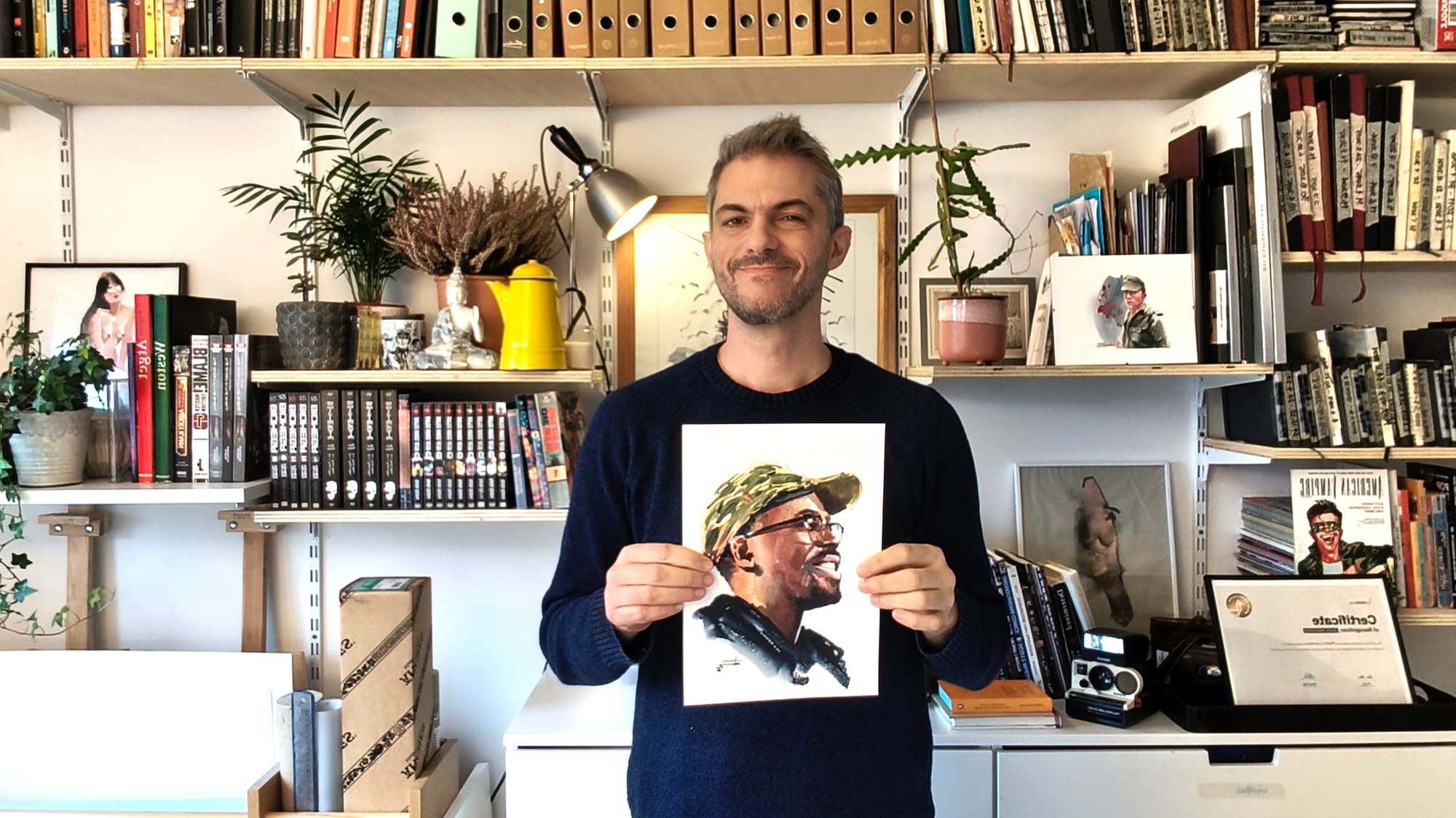
In this lesson, artist Pedro Loureiro demonstrates how to capture the vitality of a candid profile portrait, accessories and all.
Rather than chasing photorealism, you will explore how to embrace the creative process, work through happy accidents, and train your eye to see complex shapes, values, and color relationships.
What You’ll Learn
- Integrating Accessories Naturally: Discover why starting a portrait around glasses can throw off your proportions, and learn to layer specs and hats over a solid foundational structure.
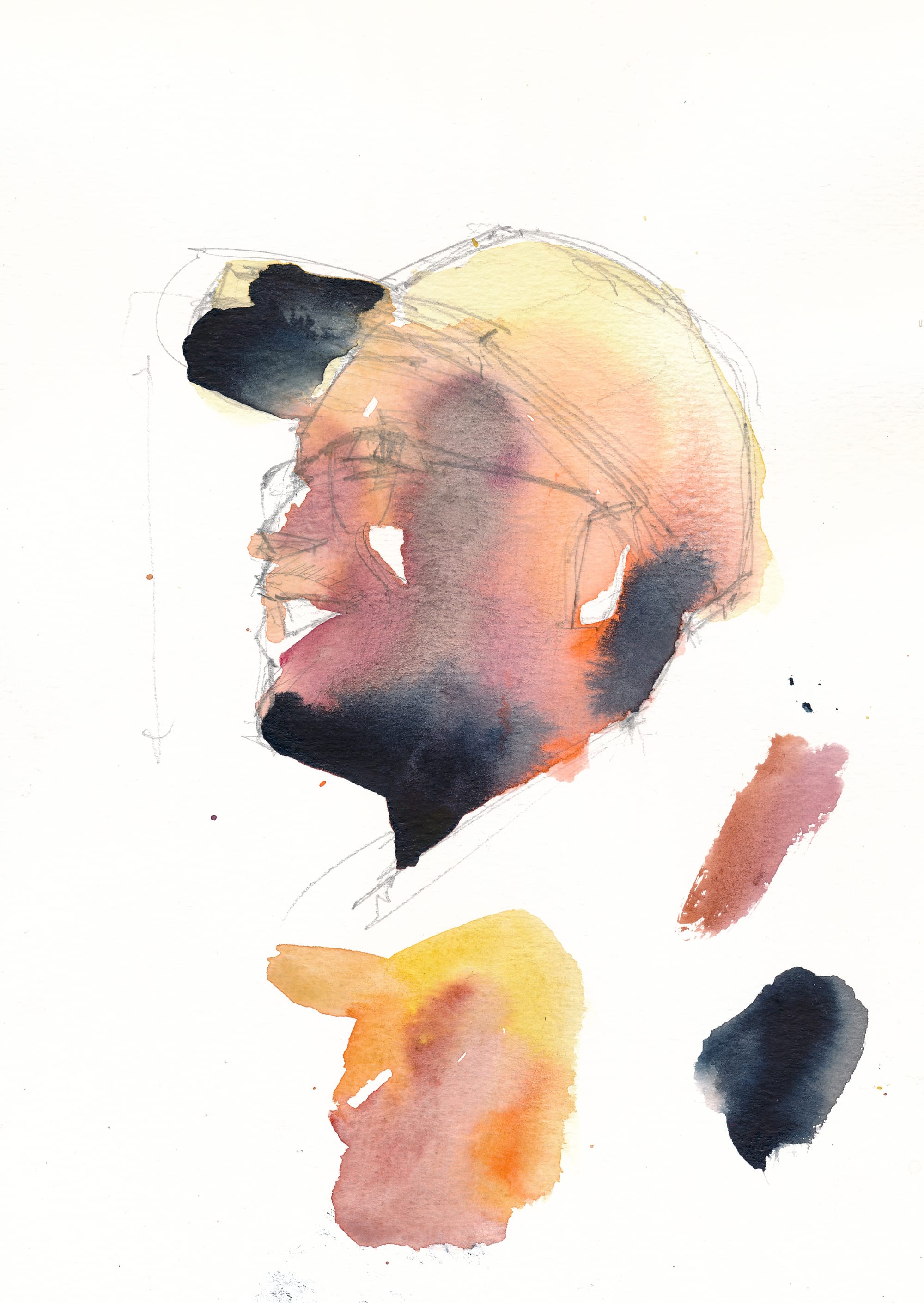
- Mapping Skin Tones & Temperatures: Practice breaking down complex skin tones into base color zones using a limited palette of yellow, orange, alizarin crimson, and cobalt blue.
- Building Contrast Through Layers: Experiment with going from light washes directly to deep darks—like Payne’s gray and sepia—before pulling the midtones together.
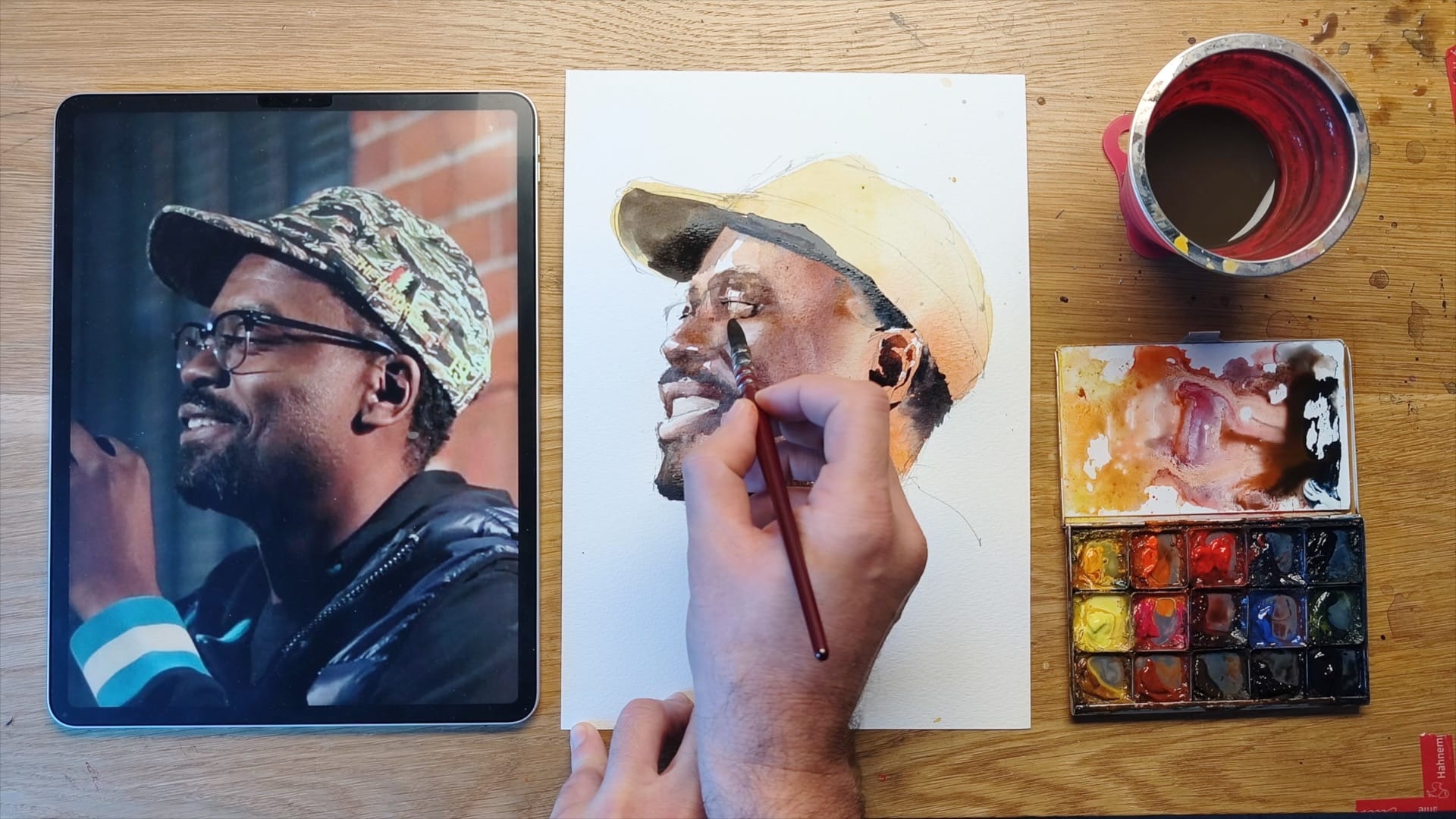
- Connecting Continuous Shapes: Train your eye to see shadows as single, fluid shapes rather than isolated details, connecting the hair, jaw, and facial features seamlessly.
- Embracing the Unpredictable: Learn to welcome watercolor’s spontaneous nature, letting hard edges bleed into soft washes to celebrate the medium itself.
Key Takeaways
- Build the Face First: Never make your initial sketch dependent on accessories like glasses. Map out the underlying head structure first, letting glasses and hats rest naturally on top of your foundation.
- Eyewear Rules: Remember that glasses hover slightly off the face rather than clinging directly to it, and don't be afraid to draw frame lines crossing over the eye in profile views.
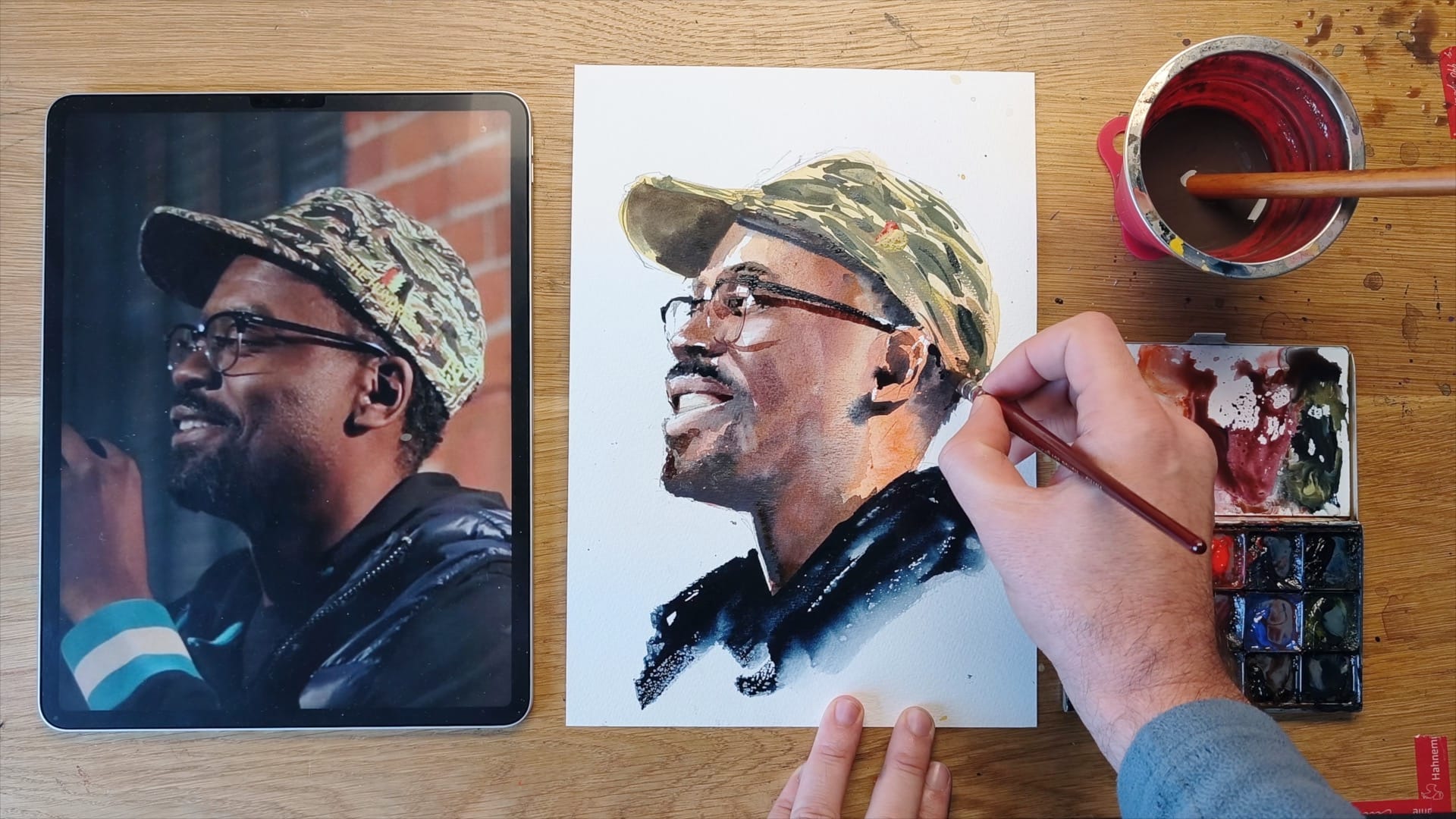
- Dose Your Primary Colors: Master skin tones by balancing four core shades—pyrrole orange, lemon yellow, alizarin crimson, and cobalt blue—adjusting the ratios to match any complexion.
- Trust the Messy Middle: Watercolor can feel chaotic halfway through. Instead of discarding a painting early, give your transparent layers time to interact and let the final details bring the piece together.
Grab your brushes, set aside any pressure to achieve perfection, and enjoy the rhythm of exploring color and form. Let's get started!